An Editorial Pathway

On the Future of Reading

From Socrates' fear of writing to the post-literate age

Every major transformation in communication has promised easier access to knowledge while threatening older habits of memory, attention, authority, education, and thought. What qualities of mind did literate culture create, and what may happen if sustained reading ceases to occupy the center of intellectual life?

45 min read 20 Sources 6 Movements
Navigate the Pathway
Movement I

Before Literacy

What Writing Displaced

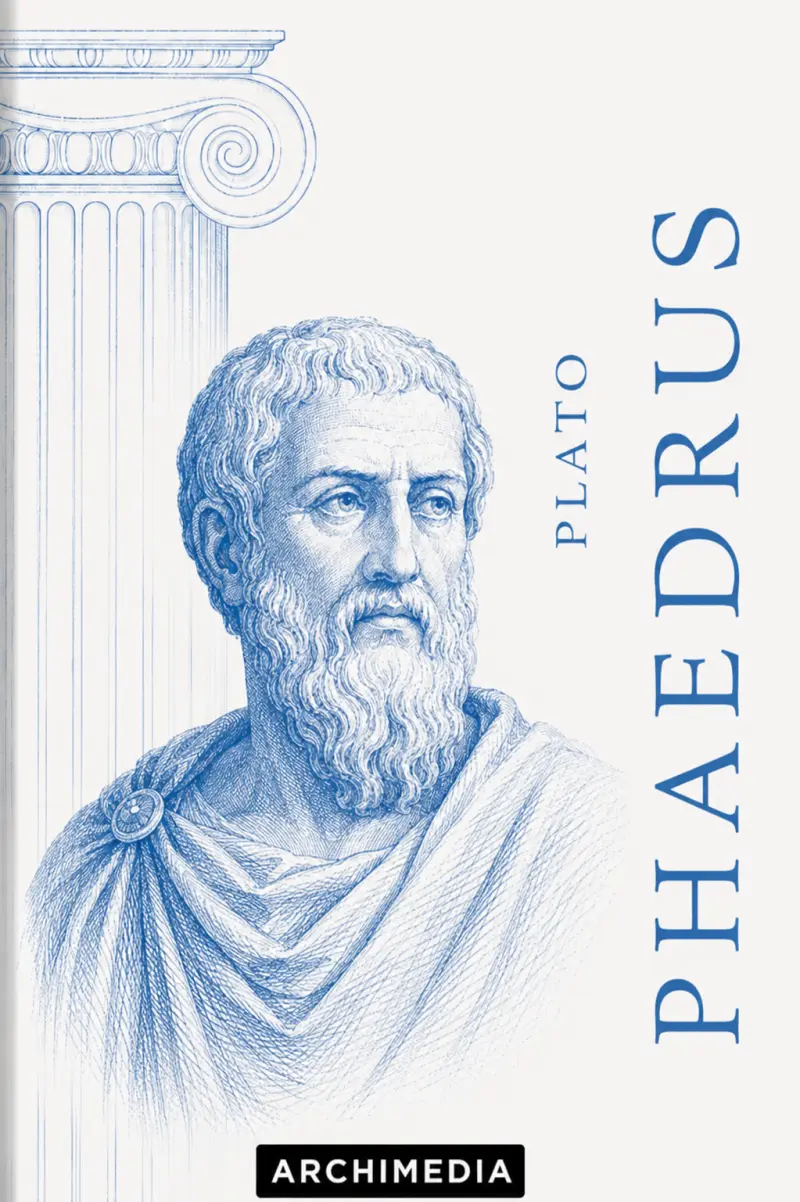
Phaedrus book cover

1

Phaedrus

Near the end of the Phaedrus, Socrates tells a story. The Egyptian god Theuth—inventor of number, calculation, geometry, astronomy, and writing—presents his inventions to King Thamus. When Theuth reaches writing, he declares it a remedy for memory and wisdom.

Thamus disagrees.

"This invention will produce forgetfulness in the minds of those who learn to use it, because they will not practice their memory. Their trust in writing, produced by external characters which are no part of themselves, will discourage the use of their own memory within them."

— Plato, Phaedrus, 275a–b (trans. Jowett, adapted)

Thamus continues: the written word will give students not wisdom but the appearance of wisdom. They will seem to know many things while knowing nothing, having received information without instruction. Writing cannot answer questions; it can only repeat the same thing. It wanders everywhere, falling into the hands of those who understand it and those who do not, unable to defend itself or explain its meaning.

There is a paradox here that Plato surely recognized: Socrates' criticism of writing has survived only because Plato wrote it down. The dialogue itself is an artifact of the technology it distrusts. This tension—using a medium to critique that medium—will recur throughout this pathway.

The Question

Was Socrates merely defending an older oral culture against an inevitable change, or did he identify a permanent danger in every technology that makes knowledge easier to retrieve but harder to internalize?
2

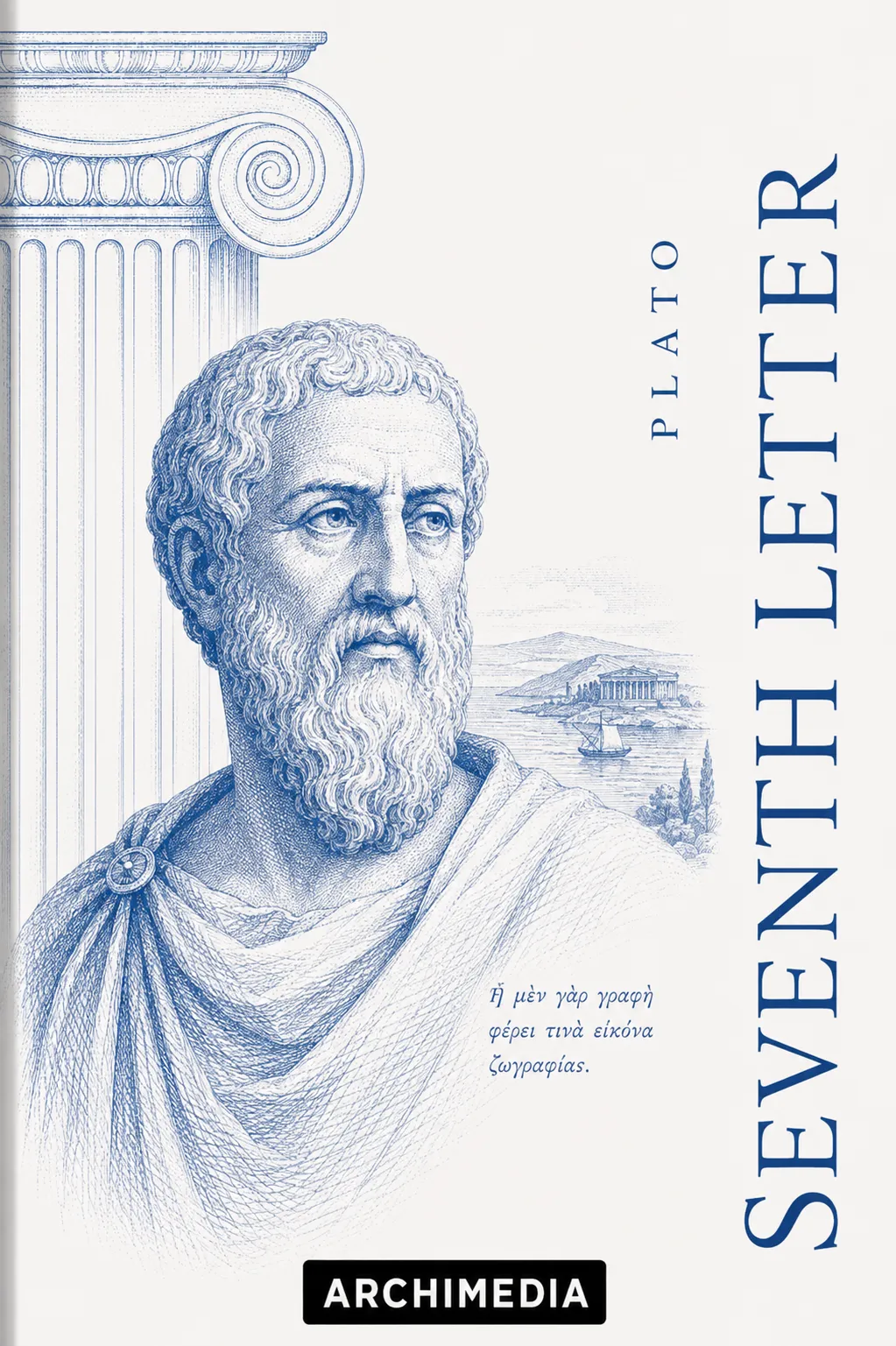
Seventh Letter

The Seventh Letter—whose authorship has been debated since antiquity—extends the Phaedrus critique. Here the author claims that philosophical understanding cannot be deposited into written formulas the way ordinary knowledge can.

"There is no writing of mine about these things, nor will there ever be. For this knowledge is not something that can be put into words like other sciences; but after long-continued intercourse between teacher and pupil, in joint pursuit of the subject, suddenly, like light flashing forth when a fire is kindled, it is born in the soul and straightway nourishes itself."

Seventh Letter, 341c–d (trans. Bury, adapted)

The deepest philosophical understanding emerges through prolonged discussion, shared inquiry, and intellectual formation—a process that writing cannot replicate. This distinction remains urgent: there is a difference between possessing statements, understanding an argument, and becoming capable of judgment. The first can be transmitted through text; the second requires engagement; the third may require something closer to apprenticeship.

Note: The authenticity of the Seventh Letter has been questioned by scholars since the 19th century. Whether or not Plato wrote it, the letter articulates a position consistent with concerns expressed in his other dialogues.

3

Oral Culture and Memory

To understand what Socrates was defending, we must imagine a world without writing—or at least a world where writing was a specialist's tool rather than the foundation of intellectual life.

In oral cultures, knowledge depends on memory. What cannot be remembered cannot be preserved. This creates distinctive characteristics:

Repetition and rhythm — Knowledge is encoded in memorable patterns: meter, rhyme, parallelism, epithet. Homer's "wine-dark sea" and "rosy-fingered dawn" are not decorative; they are mnemonic anchors.

Formula and performance — Oral poets do not recite memorized texts; they recompose during performance using traditional phrases and type-scenes. Each telling is both the same and different.

Communal participation — Knowledge lives in the community, not in external storage. The bard performs; the audience listens; the tradition continues through human bodies and voices.

Concrete situations — Abstract concepts are embedded in stories, proverbs, and examples rather than analytical definitions. Justice is not defined; it is shown through Achilles and Agamemnon, through Odysseus and the suitors.

— Characteristics synthesized from Havelock, Ong, and Lord

None of this makes oral culture primitive or deficient. It is simply different—adapted to different constraints. The question is what we gain and what we lose when those constraints change.

The argument advances: If oral culture shaped thought in distinctive ways, what happened when literacy became widespread? We turn now to the experience of the reader confronting textual abundance.

Movement II

The Reader Confronts Abundance

From Ecclesiastes to the Humanists

"Of making many books there is no end, and much study is a weariness of the flesh."

— Ecclesiastes 12:12

5

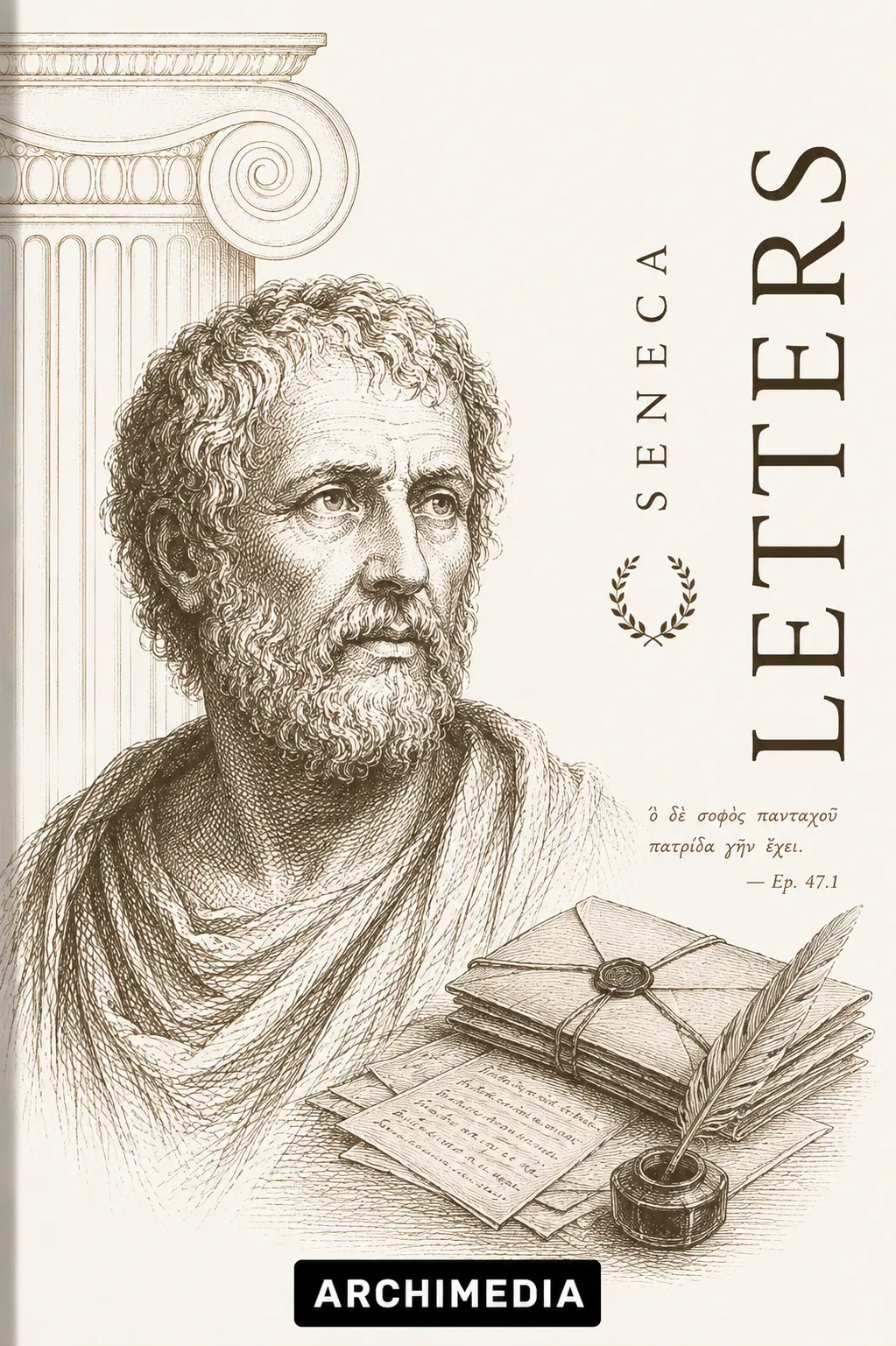
Moral Letters, Letter 2

Nearly four hundred years after Plato, the Roman philosopher Seneca confronted a different problem: not writing itself, but the abundance of books and the restlessness of readers who flit from text to text without settling anywhere.

"Be careful that the reading of many authors and books of every kind does not produce confusion and uncertainty in your mind. You must linger among a limited number of master thinkers and digest their works, if you would derive ideas which shall cling fast to you."

"Everywhere means nowhere. When a person spends all his time in foreign travel, he ends by having many acquaintances, but no friends."

— Seneca, Letters to Lucilius, Letter 2 (trans. Gummere)

Seneca's wandering reader is instantly recognizable: switching between tabs, following links into an infinite regress, bookmarking articles never to be read, accumulating quotations never to be absorbed. The technology has changed; the cognitive pattern has not.

But we should not claim Seneca's situation was identical to ours. His library contained perhaps a few hundred scrolls; we have access to effectively infinite text. The scale differs by orders of magnitude. Still, the prescription holds: depth requires limitation, and limitation requires choice.

6

Humanist Reading

If Seneca warned against superficial reading, the Renaissance humanists articulated what reading could be at its best. For Petrarch, books were not repositories of information but companions—voices from across the centuries with whom one could converse.

"I am never less alone than when I am alone, nor less at leisure than when I am at leisure. Thanks to my books, I can talk with the dead—and in their company, I am never bored."

— Petrarch, Letters on Familiar Matters, paraphrased

This vision shaped European education for centuries. Reading was not passive consumption but active formation: moral cultivation through encounter with exemplary minds, rhetorical training through imitation of excellent models, preparation for public life through familiarity with history and philosophy.

Erasmus advised readers to keep commonplace books—personal collections of quotations and observations organized by theme. Reading fed writing; writing clarified reading; both served thinking. The humanist reader was not a consumer but an interlocutor, a student, and eventually a creator.

The Question

If reading at its highest is conversation across time, what happens when reading becomes scanning, and scanning becomes having an AI summarize?

7

Early Information Management

The printing press created not only opportunity but crisis. By the mid-sixteenth century, the number of available books had overwhelmed any individual's capacity to survey them. The Swiss scholar Conrad Gessner responded with the Bibliotheca Universalis—an attempt to catalog every book written in Latin, Greek, and Hebrew.

Gessner's project was impossible; he knew it was impossible. But the attempt itself inaugurated a tradition: indexes, catalogues, encyclopedias, bibliographies, systems of excerpting and classification. Each generation invented new tools to manage its textual abundance:

Indexes — allowing readers to find specific topics without reading entire books

Commonplace books — personal anthologies of memorable passages

Marginalia — conversations with texts conducted in the margins

Scholarly correspondence — networks of readers sharing discoveries

Encyclopedias — attempts to organize all knowledge systematically

— Techniques developed between 1500–1800

The pattern is clear: information abundance repeatedly produces new technologies of organization. We are not the first generation to feel overwhelmed; we are merely the latest. But the question remains whether our tools are adequate to our scale.

The argument advances: Print did not merely add more books; it transformed consciousness itself. We turn now to scholars who have traced that transformation.

Movement III

Print Creates a New Intellectual World

How Media Reorganize the Mind

8

Preface to Plato

In 1963, the classicist Eric Havelock published a radical reinterpretation of Plato's quarrel with the poets. Why did Plato want to banish Homer from the ideal city? Because, Havelock argued, Homer represented the old oral culture that Plato's literate philosophy was displacing.

Havelock's central claim: the transition from oral to literate culture in ancient Greece did not merely add a new storage medium; it transformed the structure of thought itself.

Oral culture required poets to memorize traditional stories and reproduce them in performance. This created pressure toward formula, toward concrete narrative, toward emotional identification with heroes. You do not memorize abstract definitions; you memorize Achilles' wrath and Odysseus' cunning.

Literacy made possible a different kind of thinking: abstraction, analysis, stable comparison, criticism of inherited formulas. When knowledge exists on the page rather than in performance, it can be examined, cross-referenced, and argued against. Philosophy—in Plato's sense—becomes possible.

— Argument summarized from Havelock, Preface to Plato

Havelock's thesis has been influential but debated. Some scholars find his dichotomy between oral and literate thought too stark. Others question whether ancient Greece was ever as purely "oral" as he suggests. But the core insight endures: media shape cognition. How we store knowledge affects how we think.

Note: Havelock's work should be read alongside that of Milman Parry and Albert Lord, whose research on oral poetry in the Balkans established the compositional techniques of oral tradition.

9

The Gutenberg Galaxy

Marshall McLuhan extended this analysis to the age of print. His central proposition—"the medium is the message"—means that media do not merely transport content; they reorganize perception, social relations, and habits of consciousness.

Print, McLuhan argued, created a particular configuration of the senses and mind:

Linear sequence — Print arranges thought in lines, one thing after another. This encourages linear argument, cause-and-effect reasoning, narrative progression.

Visual uniformity — Every copy is identical. This makes possible exact quotation, precise citation, stable comparison across copies.

Private reading — Unlike the oral performance, the printed book is read silently, alone. Interiority deepens; the individual becomes the locus of meaning.

Specialized knowledge — Print enables the accumulation of specialized expertise across generations. Fields of knowledge diverge and deepen.

— Themes from McLuhan, The Gutenberg Galaxy

McLuhan saw electronic media—especially television—dissolving the print configuration and returning to something like oral/tribal consciousness: immediate, simultaneous, global, mosaic rather than linear. Whether he was right about what was coming, his method remains essential: attend not only to what is said but to the form that carries it.

10

Orality and Literacy

What Literacy Did to the Human Mind

Walter Ong, a student of McLuhan and a Jesuit scholar, produced what remains the most systematic comparison of oral and literate consciousness. Orality and Literacy draws on anthropology, psychology, and literary history to trace how writing—and especially print—restructured human cognition.

"Writing restructures consciousness."

— Ong, Orality and Literacy, p. 78

Ong identifies several transformations:

Separation of knower and known. In oral culture, knowledge exists in living memory; to know is to participate. Writing creates distance. The text exists independently of any speaker; it can be analyzed as an object.

Decontextualization. Oral communication depends on shared context—gestures, tone, immediate situation. Writing must create its context through words alone. This pressure toward explicit statement is also pressure toward abstraction.

Revision and visual inspection. The spoken word vanishes as it is uttered; the written word persists. Writers can revise, reconsider, reorganize. Readers can go back, compare passages, check arguments. The recursive loop of writing and reading enables analytic precision impossible in speech.

Ong is careful not to present oral culture as deficient. Oral peoples are not less intelligent than literate peoples; they simply think differently, with different strengths and limits. The question is not whether literacy is "better" but what cognitive capacities literacy cultivates—and what happens when those capacities atrophy.

11

The Printing Press as an Agent of Change

If Ong explains changes in consciousness, Elizabeth Eisenstein explains changes in institutions. Her monumental study traces how print transformed the practices of scholarship, science, and religion in early modern Europe.

The key features of print culture:

Preservation. Manuscripts decay, are lost, are destroyed. Print produces hundreds or thousands of identical copies; survival becomes likely rather than miraculous.

Standardization. Printed editions can be corrected and improved. Over time, texts become more accurate rather than more corrupt. Maps, anatomical diagrams, mathematical tables—all become reliable tools.

Dissemination. Ideas travel. A scholar in London can read what a scholar in Florence published last year. Networks of correspondence become networks of publication.

Cumulative knowledge. Each generation builds on the printed record of the last. Science becomes possible as a collective enterprise sustained across time.

— Themes from Eisenstein, The Printing Press as an Agent of Change

The Reformation, the Scientific Revolution, the Enlightenment—none are explicable without print. Luther's theses spread across Europe in weeks. Copernicus's tables circulated among astronomers who could compare observations. The public sphere of reasoned debate emerged from a world of printed pamphlets and periodicals.

The argument advances: Print created the intellectual world we inherited. What happens to that world when electronic media challenge print's dominance?

Movement IV

Electronic Media Challenge Print Culture

From Television to the Internet

12

Amusing Ourselves to Death

When Public Discourse Became Entertainment

Neil Postman, writing when television dominated American culture, made a crucial distinction. We fear Orwell's 1984—truth suppressed by tyranny. But Huxley's Brave New World may be the more relevant prophecy: truth drowned in a sea of irrelevance, triviality, and amusement.

"What Orwell feared were those who would ban books. What Huxley feared was that there would be no reason to ban a book, for there would be no one who wanted to read one."

— Postman, Amusing Ourselves to Death, Introduction

Television, Postman argued, does not merely add images to public discourse; it reorganizes public discourse according to the demands of entertainment. Politics becomes a contest of images. Religion becomes televangelism. Education becomes edutainment. News becomes a sequence of disconnected sensations.

The problem is not that television lies. The problem is that it makes seriousness impossible—or rather, that it makes seriousness itself a kind of entertainment. A medium that requires spectacle to hold attention cannot sustain the kinds of extended argument that print enables.

Postman's analysis applies not only to television but to any medium governed by the logic of engagement, attention capture, and entertainment value.

13

Twilight of the Books

In 2007, Caleb Crain published an essay in The New Yorker that asked what would happen if reading itself declined—not just literary reading, but the habit of sustained engagement with extended text.

Crain synthesized research showing declining reading rates, especially among young adults. But his essay went further: drawing on Havelock and Ong, he asked what cognitive capacities might atrophy if literacy ceased to be culturally central.

"If, over time, many people choose television over books, then a nation's conversation with itself is likely to change. If literacy were to decline... the culture might become more oral—more dependent on gossip, anecdote, and image."

— Crain, "Twilight of the Books," The New Yorker, December 2007

Crain's most unsettling observation: mass literacy is historically unusual. For most of human history, most people could not read. The twentieth century's assumption that nearly everyone should read and that reading should be central to civic life was an achievement, not a permanent state. It could be lost.

14

Is Google Making Us Stupid?

Nicholas Carr's 2008 Atlantic essay—and his subsequent book The Shallows—brought concerns about digital media to a mass audience. Carr was not the first to worry about the internet and attention; he was simply the most vivid.

"What the Net seems to be doing is chipping away my capacity for concentration and contemplation. My mind now expects to take in information the way the Net distributes it: in a swiftly moving stream of particles."

— Carr, "Is Google Making Us Stupid?," The Atlantic, July/August 2008

Carr distinguished between the internet as a source of information and the internet as an environment that trains habits of attention. The former is obviously valuable; the latter may be cognitively damaging. When we spend hours scanning, clicking, and skimming, we are not merely retrieving information—we are practicing a mode of engagement that makes sustained attention harder.

The neurological claims in The Shallows should be held with appropriate caution; brain plasticity does not mean that reading a few web pages rewires our neurons irreversibly. But the phenomenological observation—that digital environments train certain habits and atrophy others—remains compelling.

15

Proust and the Squid / Reader, Come Home

Maryanne Wolf is a cognitive neuroscientist who studies reading and the reading brain. Her work provides scientific grounding for the concerns raised by Postman and Carr.

Wolf's central point: humans are not born to read. Unlike language—which develops naturally given exposure—reading is a cultural invention that must be taught, practiced, and sustained. The reading brain is built, not inherited.

"We are not only what we read. We are how we read."

— Wolf, Reader, Come Home

Deep reading—the kind that involves empathy, inference, critical analysis, and reflection—depends on cognitive circuits that take years to develop. These circuits can also atrophy. When skimming becomes our default mode, we may lose the capacity for the slower, more integrative processing that serious reading requires.

Wolf is not anti-digital; she uses digital tools herself. Her concern is that we may be raising a generation of readers who never develop deep-reading circuits because they never practice deep reading long enough. The capacity is not being suppressed; it is simply never being built.

16

How We Read Now

Naomi Baron's research introduces a more measured perspective on the print-vs-screen debate. Based on extensive surveys and studies across multiple countries, she finds that the picture is complicated.

Students generally report better comprehension when reading print, especially for complex material. They also report more distraction when reading on screens. But print is not universally superior, and screens are not uniformly harmful.

Factors that matter include: the complexity of the text, the reader's motivation, the presence of distractions, the navigation tools available, and the reader's prior experience with each medium. It is not the screen itself but the reading conditions that often determine comprehension.

— Summary of research from Baron, How We Read Now

Baron's work prevents the pathway from becoming dogmatically anti-screen. The concern is not with pixels but with practices—with the habits, expectations, and environments that shape reading. A screen that enables focused, uninterrupted reading may be fine; a screen connected to notifications, social media, and infinite distractions probably is not.

The argument advances: Concern over media is not new—but is something genuinely new happening now? We turn to the question of what distinguishes digital overload from its predecessors.

Movement V

Information Overload Is Not New

But Something May Be New

17

Historical Information Overload

Before we panic about the present, we should recognize that complaints about information abundance are as old as information itself. Every generation has felt overwhelmed by expanding systems of knowledge:

Ecclesiastes (c. 300 BC): "Of making many books there is no end."

Seneca (65 AD): Warns against "reading everywhere."

Gessner (1545): Attempts to catalog all Latin, Greek, and Hebrew books.

Leibniz (1680s): Complains of "the horrible mass of books which keeps on growing."

18th century: Pamphlets warn of a "plague of books."

19th century: Newspapers and cheap novels provoke fears of distracted reading.

— Historical survey

The pattern suggests that humans regularly feel overwhelmed by information—and then adapt, developing new tools and practices. Perhaps our situation is no different.

But perhaps repetition does not prove equivalence. Each new medium creates a distinct form of overload. Digital abundance differs from earlier abundances in several ways:

Infinite feeds — no bottom, no completion, no natural stopping point

Algorithmic selection — content optimized for engagement, not formation

Persistent notification — interruption built into the architecture

Individualized persuasion — systems that learn your vulnerabilities

Multimedia simultaneity — text, image, video, sound competing for attention

Collapse of production/consumption — everyone is a potential publisher

Generative AI — unlimited production of plausible text

— Features distinguishing digital from earlier abundance

The Question

Does the recurrence of overload complaints prove that modern anxiety is exaggerated—or does each new medium create genuinely new cognitive challenges?

18

Artificial Intelligence and Delegated Reading

A new question now emerges: What happens when AI can summarize books, simplify difficult prose, answer questions about texts we have not read, extract arguments, and generate essays?

This is not a hypothetical. Large language models can already produce plausible summaries of nearly any book. Students use AI to summarize readings. Professionals use AI to extract key points from reports. The friction of reading is being engineered away.

The question is what is lost. Does AI provide:

Information from a book? — Certainly.

Knowledge of a book? — Perhaps, in a limited sense.

Understanding equivalent to having read it? — Probably not.

Intellectual formation? — Almost certainly not.

Encounter with another mind? — No.

Memory earned through effort? — No.

— Distinctions to consider

A person who extracts propositions from a book has not necessarily undergone the intellectual experience of reading it. The propositions may be the same; the effect is not.

This does not mean AI has no legitimate role. Translation assistance, contextual explanation, vocabulary support, comparison across texts, tutoring, helping a reader reenter a difficult work—all of these can serve rather than replace reading. The concern is substitution, not assistance.

A summary is to reading what a photograph of a meal is to eating.

Movement VI

The Post-Literate Question

What Comes After the Reading Age?

19

The Elite College Students Who Can't Read Books

In October 2024, Rose Horowitch published an article in The Atlantic that crystallized concerns that had been accumulating for years. The article reported that professors at elite universities—Columbia, Georgetown, Stanford, and elsewhere—were finding that students increasingly could not complete full books.

This was not a matter of laziness or distraction; students were arriving at college without having developed the capacity for sustained reading. They had been educated on excerpts, summaries, and fragments. The skill of reading a complex book from beginning to end—of holding an argument in mind across hundreds of pages—had not been cultivated.

"Students are coming to college not having read a single book cover to cover in high school. Not one."

— Professor quoted in Horowitch, The Atlantic, October 2024

Horowitch's reporting connects to the entire tradition traced in this pathway. Plato worried that writing would produce the appearance of wisdom without understanding. Seneca warned against scattered reading. Postman predicted that entertainment would displace serious discourse. Wolf demonstrated that reading circuits must be built through practice. And now, faculty report that the circuits are not being built.

Whether this represents a temporary educational crisis or a civilizational transition remains unclear. But the question can no longer be avoided: Are we witnessing the end of the reading age?

What Comes After the Reading Age?

What must be preserved?

The cognitive virtues that sustained reading cultivates: sustained attention, memory, abstraction, interiority, judgment, patience, interpretation, encounter with difficult thought, conversation across generations, the ability to follow a long argument to its conclusion.

These are not merely "reading skills." They are habits of mind that make serious thought possible. Democracies require citizens who can evaluate arguments. Professions require practitioners who can master complex material. Individuals require the capacity to think beyond the immediate stimulus.

What cannot simply be restored?

We cannot recreate a world in which printed books monopolize education, literary culture dominates leisure, information is scarce, universities control access to advanced learning, and digital media can simply be abolished.

Nostalgia is not a strategy. The conditions that made the reading age possible—limited entertainment options, physical libraries, slower communication, scarcity of publication—are not returning. Any serious response must work with digital tools, not against them.

What must be invented?

New forms that preserve the cognitive benefits of sustained reading while working within digital environments:

New reading communities — groups that commit to reading together, slowly and seriously, resisting the pressure of the feed.

Serious digital publications — platforms designed for reflection rather than engagement, for depth rather than scale.

Guided intellectual pathways — curated sequences that restore the sense of a beginning, middle, and end to reading.

Deliberate educational rituals — practices that protect reading time from interruption and distraction.

Technologies designed for formation — tools that help readers build attention rather than capture it.

Physical artifacts — pamphlets, books, and documents that resist the logic of infinite scroll.

The goal is not to return to the past but to carry forward what the past achieved into forms adequate to the present.

Archimedia exists to explore whether the intellectual virtues formed by books can be preserved, renewed, and carried into new forms.

The question is not whether technology will change how we think—it already has. The question is whether we will guide that change or simply undergo it.

Sources & Further Reading

Ancient Sources

  • Plato, Phaedrus, trans. Benjamin Jowett (public domain)
  • Plato (attrib.), Seventh Letter, trans. R.G. Bury (public domain)
  • Seneca, Letters to Lucilius, Letter 2, trans. Richard Gummere (public domain)
  • Ecclesiastes 12:12 (various translations)

Orality and Literacy

  • Eric Havelock, Preface to Plato (Harvard University Press, 1963)
  • Walter J. Ong, Orality and Literacy: The Technologizing of the Word (Routledge, 1982)
  • Albert Lord, The Singer of Tales (Harvard University Press, 1960)

Media Theory

  • Marshall McLuhan, The Gutenberg Galaxy (University of Toronto Press, 1962)
  • Elizabeth Eisenstein, The Printing Press as an Agent of Change (Cambridge University Press, 1979)
  • Neil Postman, Amusing Ourselves to Death (Penguin, 1985)

Digital Reading

  • Nicholas Carr, "Is Google Making Us Stupid?," The Atlantic, July/August 2008
  • Nicholas Carr, The Shallows: What the Internet Is Doing to Our Brains (W.W. Norton, 2010)
  • Maryanne Wolf, Proust and the Squid: The Story and Science of the Reading Brain (Harper, 2007)
  • Maryanne Wolf, Reader, Come Home: The Reading Brain in a Digital World (Harper, 2018)
  • Naomi Baron, How We Read Now (Oxford University Press, 2021)

Contemporary Reporting

  • Caleb Crain, "Twilight of the Books," The New Yorker, December 24, 2007
  • Rose Horowitch, "The Elite College Students Who Can't Read Books," The Atlantic, October 2024

Information Overload History

  • Ann Blair, Too Much to Know: Managing Scholarly Information before the Modern Age (Yale University Press, 2010)
  • Chad Wellmon, Organizing Enlightenment: Information Overload and the Invention of the Modern Research University (Johns Hopkins University Press, 2015)