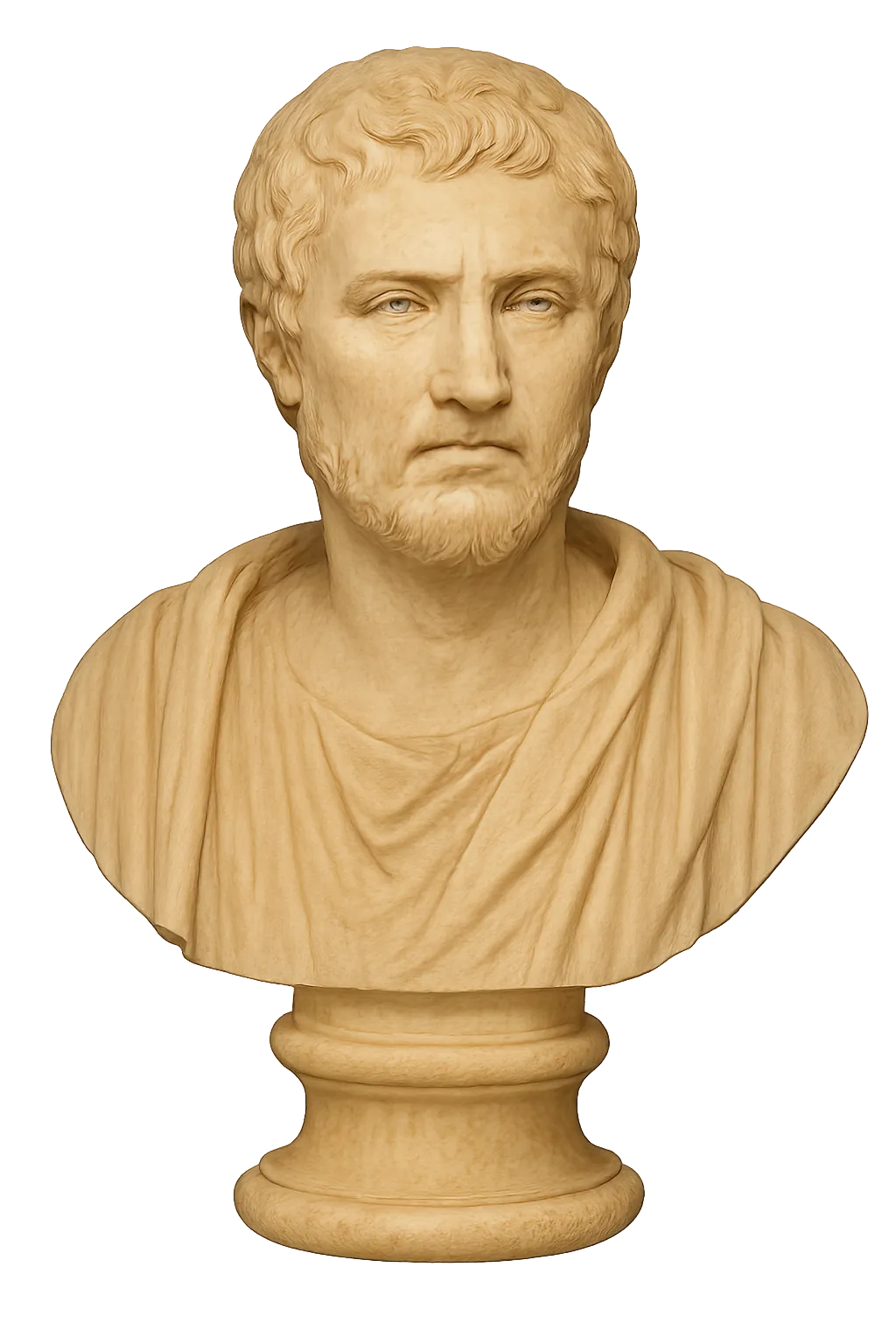
Boethius
c. 477-524 AD | Rome, Ostrogothic Kingdom
The last of the Romans and the first of the scholastics. Anicius Manlius Severinus Boethius served as consul under the Ostrogothic king Theodoric, translating Aristotle and Plato to preserve them for the dark centuries ahead. Falsely accused of treason, he awaited execution in prison and there wrote his masterpiece: The Consolation of Philosophy. Lady Philosophy visits his cell to remind him that Fortune's wheel turns, that true happiness lies beyond her reach, and that Providence governs all. It became the most copied book of the Middle Ages after the Bible.
Boethius's Works
Philosophy, logic, and music theory"Nothing is miserable unless you think it so; and on the other hand, nothing brings happiness unless you are content with it."
- The Consolation of Philosophy
"In other living creatures, ignorance of self is nature; in man it is vice."
- The Consolation of Philosophy
"Who would give a law to lovers? Love is unto itself a higher law."
- The Consolation of Philosophy
"If there is a God, whence proceed so many evils? If there is no God, whence cometh any good?"
- The Consolation of Philosophy
"Music is so naturally united with us that we cannot be free from it even if we so desired."
- De Institutione Musica